- Home
- Government
- Departments
- Police
- Bicycle, e-bike and e-scooter safety
Bicycle, e-bike and e-scooter safety
Bikes, e-bikes (electric bicycles) and e-scooters (electric scooters) have become a popular way to get around the city, especially for younger residents. If you're considering purchasing or using e-bikes, please familiarize yourself with the RCWs to understand the difference between e-bikes and e-motorcycles (electric motorcycles), and learn the rules of the road. This knowledge helps promote safety on Centralia roads, sidewalks and trails.
Parental Support
E-bikes are very popular with kids and teens. It’s critical for parents to teach children how to safely operate them. Riding fast on two wheels can be fun, but can also pose serious risks, especially for young or inexperienced riders.
Make sure you are familiar with your responsibilities when riding an e-bike. They are in place to ensure your safety and the safety of those around you. It’s important to follow the rules and ride with consideration for others. Community safety is the reason there are laws and regulations for bikes, e-bikes and e-scooters.
Is it an e-bike or an Electric Motorcycle?
There are clear differences between regular bicycles, e-bikes, and electric motorcycles, which are outlined in Washington State law:
- Bicycles are powered by pedals exclusively.
- E-bikes are bicycles that can be assisted by an electric motor. Some e-bikes only provide electric assistance when the rider is pedaling. Others can propel the e-bike using electric power alone. Legal e-bikes always have pedals and travel at a maximum speed of 20mph (when using only electric power) or 28mph (with the rider also pedaling). An e-bike motor will never exceed 750 watts of power. In Washington state, new e-bikes are required to have a label that includes their class, top assisted speed, and motor wattage (RCW 46.37.690). The labels are often located on the top tube or near the bottom bracket on the e-bike.
- E-motorcycles sole power source is an electric motor and often don’t have moving pedals. They have foot pegs, other brackets, or supports. Without moving pedals capable of propelling it, the cycle is classified as a motorcycle.
Make sure you know the difference between an e-bike and an electric motorcycle. Many e-motorcycle makes and models are marketed as e-bikes and are capable of traveling much faster than a traditional e-bike.
E-motorcycles are different
E-bikes are motor-assisted bicycles and come with moderate safety risks. Electric motorcycles are motorcycles. They are more powerful, reach high speeds, and pose significant safety risks for kids. It’s also illegal to ride an electric motorcycle if you are under the age of 16 or are over 16 but don’t possess a driver’s license with motorcycle endorsement. E-motorcycles are also considered illegal unless they are registered – just like all other motor vehicles.
An e-motorcycle cannot be ridden as soon as you get it home and out of the box. Electric motorcycles are required to be registered with the Washington State Department of Licensing, and per state law, the licensed operator must have insurance. This means for an electric motorcycle to be ridden on a road; it must have a license plate and meet the requirements of RCW 46.61.705. E-motorcycle operators are required to hold a driver's license with motorcycle endorsement and wear a helmet.
E-bike Rider Responsibilities
E-bikes can be used in most places traditional bikes are allowed, but that also depends on the class of e-bike.
Types of E-bikes:
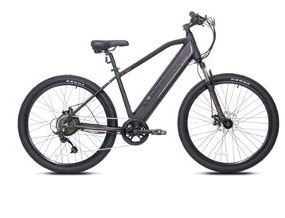 Class 1: These e-bikes can go up to 20 mph and only provide electric assistance when the rider is pedaling. They can be ridden anywhere traditional bikes are permitted – including mixed-use trails, bike lanes, and roads – unless otherwise noted. Such notification includes anywhere posted signs prohibit motorized vehicles.
Class 2: These e-bikes can go up to 20 mph but can propel the bike without pedaling. They can be ridden most places where traditional bikes are permitted – including mixed-use trails, bike lanes, and roads – unless otherwise noted.
Class 3: These e-bikes can go up to 28 mph and have additional rules. The rider must be 16 or older. They can be ridden on roads. Class 3 e-bikes are also generally prohibited on sidewalks and shared-use paths.
Rules for Operating E-bikes
E-bike operators must follow all rules of the road and should not ride in any way that endangers people, property, or obstructs travel. Remember to ride with common sense and with safety as your priority. And, of course, follow the rules.
Rules of the Road for ALL Riders, regardless of type of bike being ridden
- Yield to pedestrians on sidewalks and in crosswalks.
- Obey posted speed limits. Exceeding the posted speed limit is a traffic violation.
- Only ride e-bikes (or any bike) where allowed.
- Be at least 16 years old if riding a Class 3 e-bike.
- An e-bike that goes faster than 28 mph is NOT an e-bike. It is an electric motorcycle and different laws apply.
mOTORIZED fOOT sCOOTERS (INCLUDES E-Scooters)
Motorized foot scooters are motorized devices with no more than two wheels, 10 inches or smaller in diameter, with handlebars, designed to be stood or sat upon by the operator. Motorized foot scooters are powered by an internal combustion engine or electric motor that is capable of propelling the device with or without human propulsion. Electric-powered motorized foot scooters are generally referred to as e-scooters. Motorized foot scooter laws include:
- To ride a motorized foot scooter on public rights-of-way, one must be 16 or older.
- Motorized foot scooters cannot be used on sidewalks or public trails within city limits.
- When riding a motorized foot scooter between a half hour after sunset to a half hour before sunrise, a headlight, a stoplight and at least two rear reflectors are required.
- Motorized foot scooters must be equipped with a muffling device in good working order and in constant operation to prevent excessive or unusual noise.
- The speed limit for motorized foot scooters is 25 mph on any public roadway.
- Passengers are not allowed on motorized foot scooters.
- It is unlawful to tow any person or thing with a motorized foot scooter.
- For more motorized foot scooter information, see RCW 46.04.336
Tips to Keep Riders and Others Safe
- Educate yourself on road rules and use bike paths or bike lanes whenever possible.
- Follow all rules of the road.
- Wear appropriate gear, including a helmet designed for e-bike riders with chin strap secured tightly.
- Slow down ahead of intersections and hazards.
- Use lights and reflectors.
- Use warning devices like bells.
- Keep tires properly inflated.
- Practice safe mounting and dismounting due to the weight of e-bikes.
Centralia Police, Riverside Fire Authority and the City of Centralia strongly advise you to follow the law and wear a proper helmet that is secured with a chin strap when riding any bike, scooter, or similar wheeled transportation. E-bikes can reach high rates of speed and helmets reduce the risk of serious head injuries.
Rule Violations and Bad Behavior
Centralia Police’s priority is public safety. As such, it will enforce e-bike, e-scooter and traffic laws and rules outlined here. That includes making sure bicycles and e-bikes are ridden correctly, safely, and considerately. Violators of these rules are subject to penalties. If you are going to ride an e-bike, know the rules; know your e-bike classification; and ride safely.
Reporting Illegal or Unsafe Bike Behavior
If you witness someone operating an e-bike, an e-scooter or an e-motorcycle in an unsafe or illegal manner as it is happening, please call 911. This includes failure to follow the rules of the road, operating an e-bike, an e-scooter or an e-motorcycle in an area where it is prohibited, and reckless riding.
To report an incident that is no longer in progress, call the non-emergency line at 360-740-1105. For non-emergency questions or concerns, you can also e-mail the Centralia Police Department at cpdrecords@cityofcentralia.com or report online anonymously here.
FAQ
- Riding on a roadway - When riding on a roadway, a bicyclist has the same rights and responsibilities as vehicle drivers (RCW 46.61.755). A bicycle is a legal vehicle, just like a car. Bicyclists who violate traffic laws may be ticketed (RCW 46.61.750).
- Riding on a sidewalk - When riding on a sidewalk or a crosswalk, a bicyclist has the same rights and responsibilities as a pedestrian (RCW 46.61.755).
- Shoulder vs. bike lane - Bicyclists may choose to ride on a path, bike lane, shoulder or travel lane as suits their safety needs (RCW 46.61.770).
- Stopping vs. yielding at stop signs - Bicyclists have the option to treat a stop sign as a yield sign unless the stop sign is located at a railroad crossing or a school bus uses a "stop" signal (RCW 46.61.190)
- Riding side by side - Bicyclists may ride side by side, but not more than two beside each other (RCW 46.61.770).
- Riding at night - For night bicycle riding, a white front light (not a reflector) visible for at least 500 feet and a red rear reflector visible from behind for 600 feet are required. A red rear light or a flashing taillight visible from behind for 500 feet may be used in addition to a required rear reflector (RCW 46.61.780).
Applicable Links
- RCW 46.61.710 Mopeds, EPAMDs, motorized foot scooters, personal delivery devices, electric-assisted bicycles, class 1 electric-assisted bicycles, class 2 electric-assisted bicycles, class 3 electric-assisted bicycles - General requirements and operation.
- RCW 46.20.500 Special endorsement - Penalties - Exceptions.
- RCW 46.61.261 Sidewalks, crosswalks - Pedestrians, bicycles, personal delivery devices.
- RCW 46.37.530 Motorcycles, motor-driven cycles, mopeds, electric-assisted bicycles - Helmets, other equipment - Children - Rules.
- RCW 46.61.705 Off-road motorcycles.
- RCW 46.61.606 Driving on sidewalk prohibited – Exception.